Books
Now available—2026
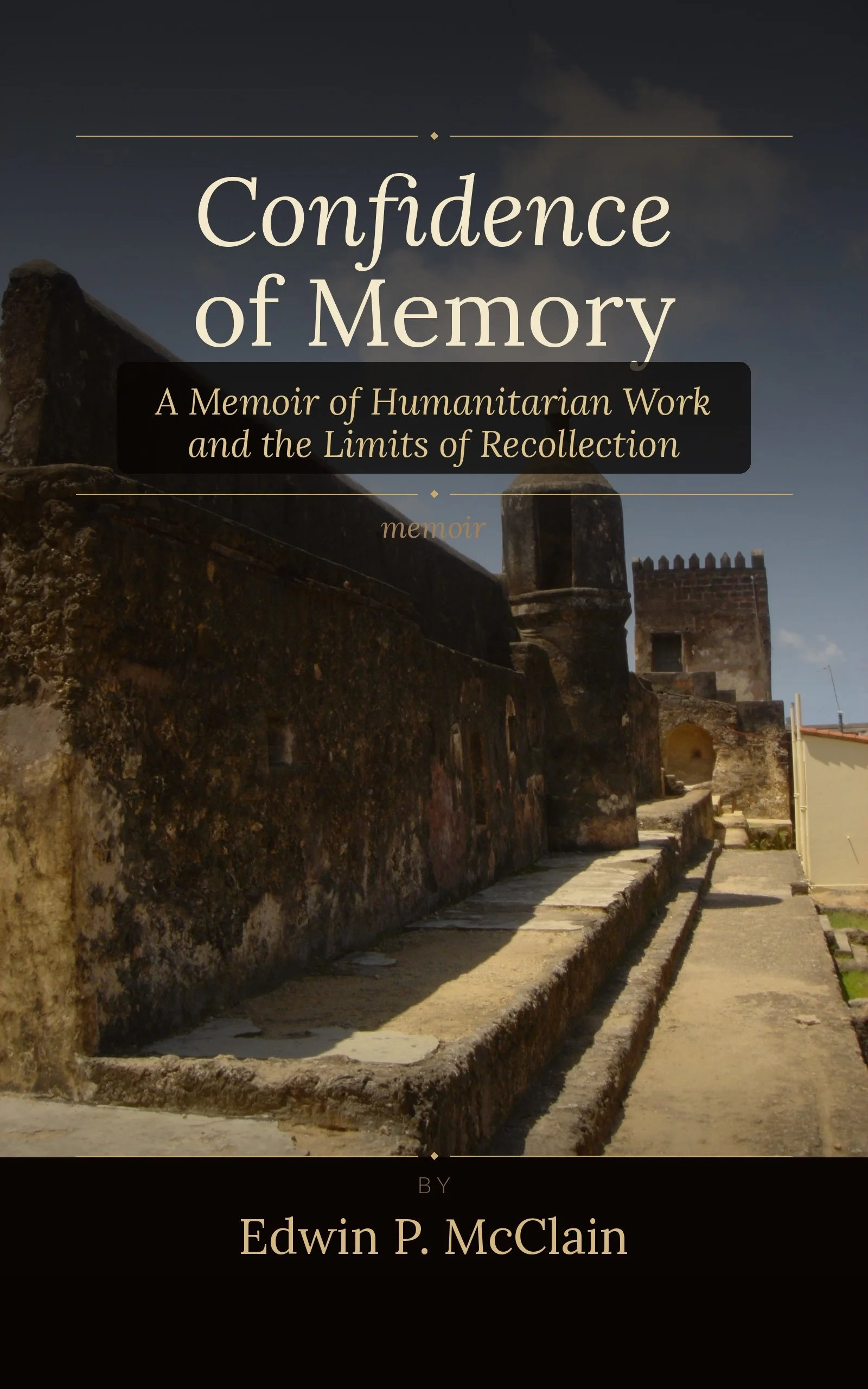
Confidence of Memory
A Memoir of Humanitarian Work and the Limits of Recollection
Over the course of a career in humanitarian work, Edwin P. McClain moved through places where ordinary life had been interrupted by war, displacement, and crisis. He worked alongside colleagues whose names he still carries and survivors whose faces have grown indistinct. He kept notes, and later lost some of them. He trusted his memory, and later questioned it.
Confidence of Memory is the account that emerged from that reckoning — a memoir that is as much about the unreliability of recollection as it is about the work itself. What does it mean to bear witness when the witness cannot fully trust his own record? What obligation does a writer owe to the people who appear in his pages, and to the truth, when the two are not always the same?
This is a book about humanitarian work. It is also a book about memory, conscience, and the long aftermath of being present in places the rest of the world struggled to see.
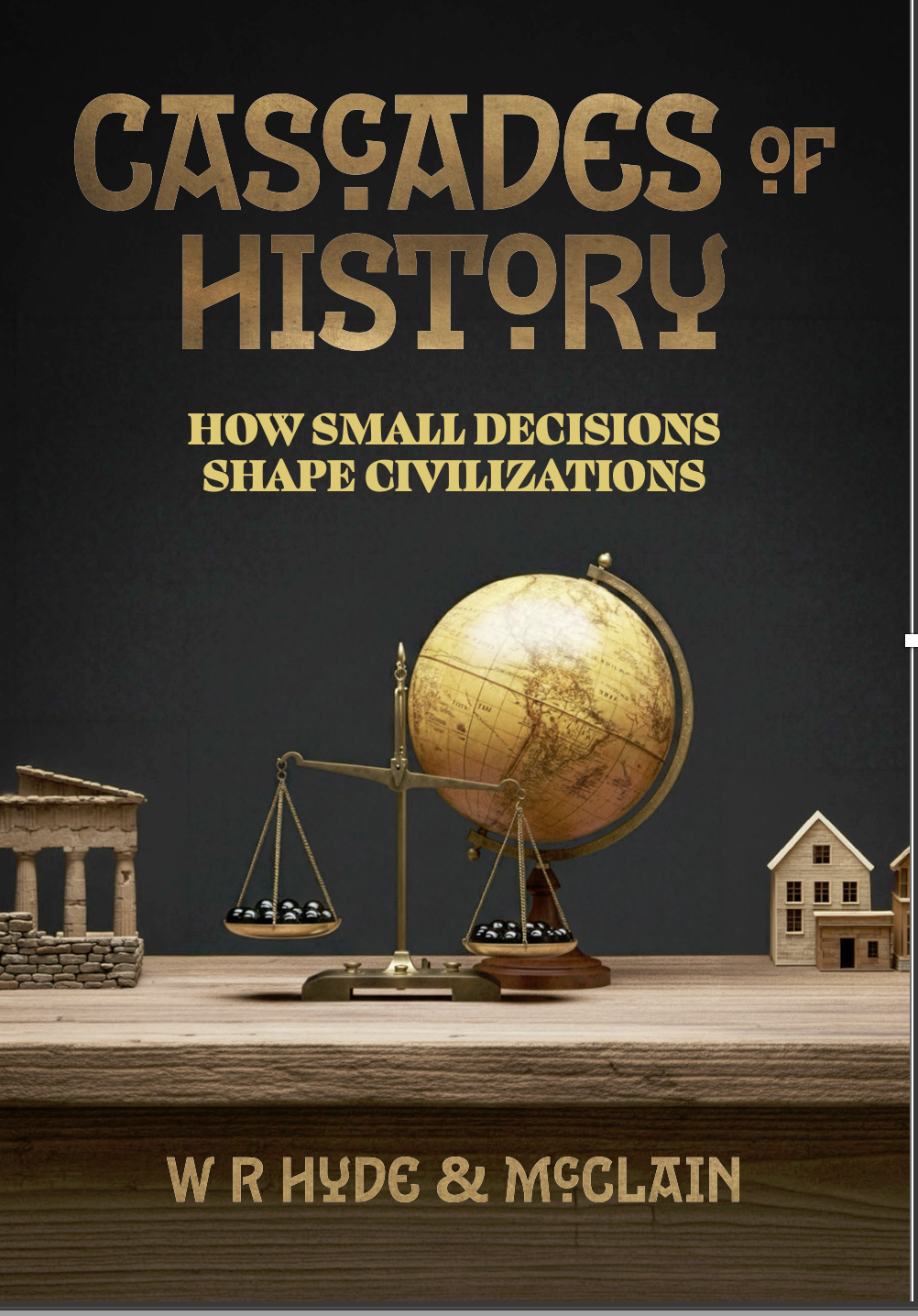
Cascades of History
How Small Decisions Shape Civilizations
W.R. Hyde and E. P. McClain
History, we tend to believe, had to happen the way it did. The Roman Empire fell. Columbus sailed. Penicillin was discovered. Looking backward, these events feel inevitable — the logical outcome of vast forces too powerful to be deflected. Cascades of History argues otherwise.
In thirty-eight carefully researched vignettes, W. R. Hyde and Edwin P. McClain examine the moments when the world as we know it was made — or nearly unmade — by choices that felt ordinary at the time. Each vignette traces a specific turning point: a real event, a real person, a real decision made under pressure, uncertainty, and incomplete information. And alongside the history as it happened, each vignette follows an alternate path — a plausible tributary that could easily have been taken instead.
These alternatives are not fantasies. They are tools for understanding how much weight a single decision can carry, and how little of that weight the person making it could see. Across thirty-eight episodes, four forces appear again and again: the limits of what any person can absorb in real time, the constraints of rank and role, the gap between what was rewarded and what was needed, and the assumptions so widely shared that no one thought to question them. Together, they form a pattern the authors call the cascade — the way small choices ripple outward, shaping the conditions under which the next choice is made, accumulating quietly into the world we inherit.
Cascades of History can be read in any order — chronologically, by scale of impact, or beginning with the events that most directly shaped the world you live in. A study guide, mapped pivot points, and a full annotated bibliography are included for readers, book clubs, and classroom use.